
Why The Many Faced God Is The Most Fascinating Character in Game of Thrones
The Many Faced God is one of the most mysterious yet fascinating figures in Game of Thrones. Explore His philosophy, Arya Stark's training, and why He remains my favorite character of the whole series.
GAME OF THRONES
7/21/20264 min read
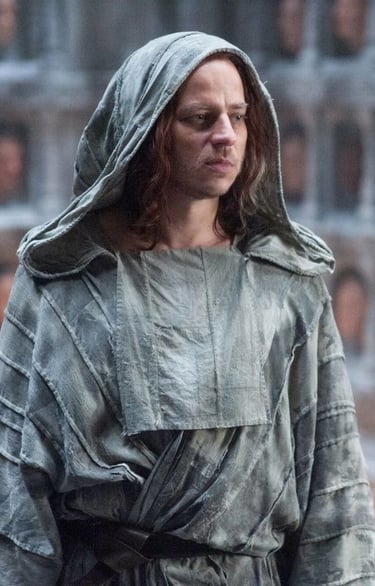
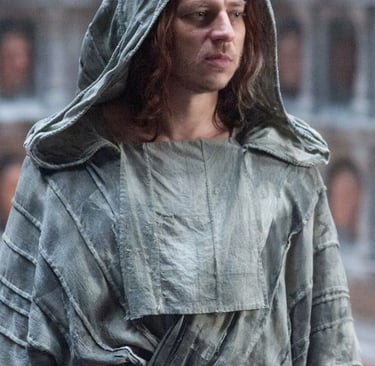
Why The Many-Faced God is My Favorite Character in Game of Thrones
There are many countless unforgettable characters in Game of Thrones. Tyrion Lannister is brilliant, Arya Stark is a bad bitch, and Cersei Lannister and her incensted son Joffrey, remain television's greatest villains. Yet no character-or perhaps more accurately, no unseen presence-has fascinated me as much as the Many-Faced God.
While the Many-Faced God rarely appears directly on screen, His influence is felt throughout Arya Stark's journey in Braavos and within the mysterious House of Black and White. To many viewers, He represents Death. To me, He represents something much deeper.
As someone who identifies as a Death witch, I have always found myself drawn to stories that explore mortality-not through fear, but through acceptance. Death is one of the few experiences every living being shares. Rather than depicting it as something monstrous, the Many-Faced God treats Death as a sacred, inevitable part of existence.
Death as Mercy
One of the most profound ideas introduced by the Faceless Men is that Death can be a gift.
Throughout the series, they often refer to Death as something that relieves suffering rather than simply ending life. Whether someone is dying from illness, grief, or unbearable pain, the "gift" is offered by the Many-Faced God is portrayed as peaceful and impartial.
That perspective has always resonated with me. Instead of seeing, Death as the enemy, the Many-Faced God reminds us that it is part of life's natural cycle. Every beginning eventually has an ending, and every ending makes room for something new.
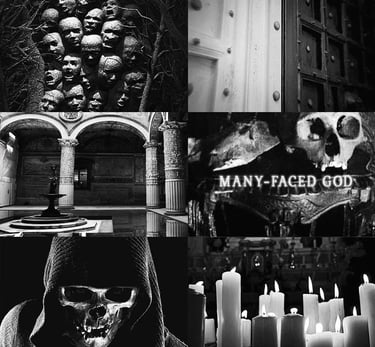
The Lesson of Letting Go
Perhaps the hardest lesson Arya learns is that becoming "No One" requires surrendering attachments. Ego death, if you will.
She is asked to give up her possessions, her identity, and even her name. While Arya ultimately refuses to abandon who she truly is, the lessons themselves remain meaningful.
The House of Black and White teaches that we often cling tightly to our anger, pride, fear, and even our identities. Letting go is uncomfortable-but it can also be freeing (See The Power of Now for more information).
I don't believe the lesson is that we should erase ourselves completely. Rather, it asks us to consider what part of ourselves no longer serve us.
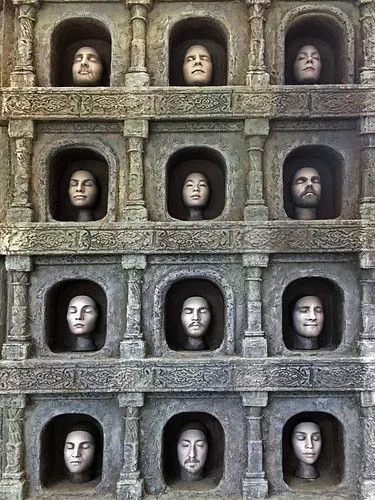
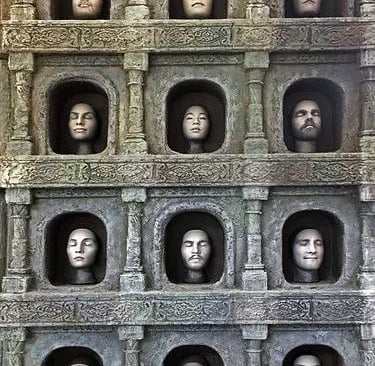
Every Face is Equal
One of my favorite aspects of the Many-Faced God is His impartiality.
Kings.
Beggars.
Warriors.
Children.
Nobles.
Criminals.
Death don't give a fuck-everybody die.
Eventually, every person meets the same destination.
In a world consumed by power struggles, greed, and violence, the Many-Faced God serves as a reminder that status means nothing to Death. Death does not nor ever will care about wealth, titles, or family names. Everyone stands equal before Him.
There is something strangely comforting about that idea.
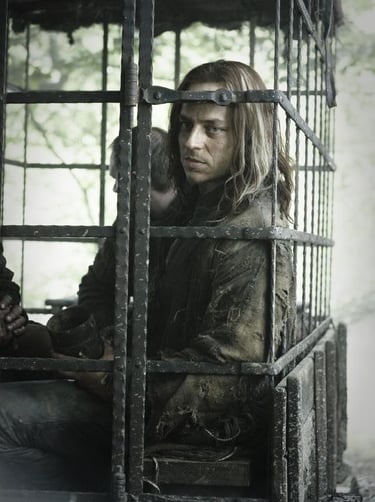
Why Arya's Training Is So Compelling
Arya's time in Braavos is one of my favorite storylines in the entire series.
Her training isn't just physical-it is psychological and spiritual. Every challenge forces her to confront fear, patience, discipline, truth, and identity. She learns that revenge alone cannot define her life, even if she never completely lets it go.
The Faceless Men are among the mysterious organizations in television because they never fully explain themselves (but personally, I think they are Spirits who have decided to devote themselves to The Many-Faced God, hence why they are faceless). Their rituals, philosophies, and traditions leave just enough unanswered that viewers continue discussing them years after the series ended.
A Different Way of Looking at Death
One reason I appreciate the Many-Faced God so much is that He offers a perspective on Death that feels thoughtful rather than terrifying.
Modern culture often treats Death as something to avoid discussing or thinking about altogether. Yet Game of Thrones presents a belief system that encourages respect for mortality instead of denying it.
Whether someone agrees with that philosophy or not, it raises meaningful questions:
-What does it mean to live well? Live fully?
-Why are we so afraid of dying? Because we don't know with 100% certainty what happens after we die?
-What would change if we accepted that (physical) life is temporary?
Those are questions worth reflecting on long after the credits roll.
Final Thoughts
The Many-Faced God may never have the screen time of Jon Snow or Daenarys Targaryen, but His philosophy leaves one of the deepest impressions in Game of Thrones.
For me, His teachings symbolize acceptance, humility, transformation, and respect for the natural cycle of life and Death. They remind us that every life has value precisely because it is finite, and that accepting mortality can make us appreciate the time we have even more.
In a series filled with dragons, White Walkers, and political intrigue, it is the quiet wisdom of the Many-Faced God that continues to stay with me.
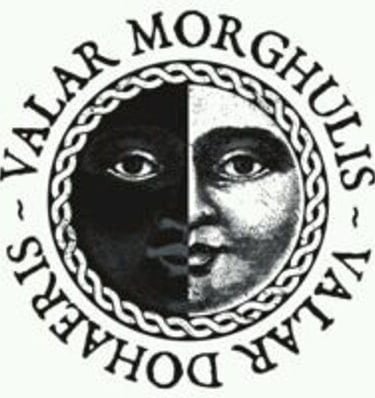
Valar Morghulis.
Valar Dohaeris.
Leave your thoughts in the comments below!
P.S. If the HBO writers are reading this, can we please get a back story series on the Many-Faced God? THANKS